

THE ARTS ONLINE
RUTH LEON'S THEATREWISE

Many of my treasured readers - that’s you - received a truncated version of this week’s Ruth Leon’s Theatrewise. Heartfelt apologies, I clicked the wrong button by mistake. Here is what you should have received. If this is your second delivery, well, you’re just lucky.
Feb 02, 2026
Good Morning and Welcome to Ruth Leon’s Theatrewise (this is the post you should have received)

So they’re closing the Kennedy Center for two years? Could be that no self-respecting artist wants to perform there and audiences are voting with their wallets that they don’t want to go there. Sad, infuriating and inevitable but, I hope, for the sake of the artists who want to work there, and the artslovers of Washington DC and beyond who want to see them, temporary.
This week on Ruth Leon’s Theatrewise, there is the usual joyful assortment of arts programmes to share – a wonderful comedy from the National Theatre and a look back at the dramatist, Carlo Goldoni, whose play was its foundation, a close look at Klimt, a painter whose lost masterpiece is no longer lost (see above), a dance from two of the best ever tappers, Gene Kelly and Donald O’Connor, and, in this week of Holocaust Remembrance Day, a moving and most unusual performance-documentary of Verdi’s Requiem.
Six million Jews died in the Holocaust and many others who were not Jews and we remember them with this concert. The memory and the music never dies.
To access all these, just click on the link beneath the pictures.
Goldoni and One Man Two Guvnors
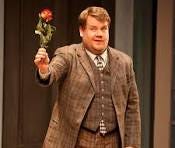
Click here for National Theatre
I noticed this week that the National Theatre at Home has just released that glorious romp, One Man Two Guvnors, online. It got me thinking about the man who wrote the original play on which it’s based, The Servant of Two Masters, by Carlo Goldoni.
Born in Venice, Goldoni died in Paris exactly 233 years ago this week, on February 6, 1793. In his lifetime, he was a prolific dramatist who renovated the well-established commedia dell’arte dramatic form by replacing its masked stock figures with more realistic characters, its loosely structured and often repetitive action with tightly constructed plots, and its predictable farce with a new spirit of gaiety and spontaneity. For these innovations, Goldoni is today considered to be the founder of Italian comedy.
To please his family he reluctantly studied law at the University of Pavia but, although he practiced law in Venice and Pisa and held diplomatic appointments, his real interest was the dramatic works he wrote for the Teatro San Samuele in Venice. Numerous plays followed, in Italian, in Venetian and, later, in French, when he moved to Paris, having fallen in love with Moliere’s plays, to direct the Comedie-Italienne.
Goldoni retired in 1764 to teach Italian to the princesses at Versailles. Sadly, after the French Revolution, his pension was cancelled, and he died in dire poverty.
He wrote The Servant of Two Masters, one of the foundational plays of the Italian Theatre in 1746, revised it in 1789, and in 2011, Richard Bean turned it into One Man Two Guvnors for the National Theatre.
If you haven’t seen this riotous comedy, or even if you have, One Man, Two Guvnors is full of high-energy physical comedy and crackling banter with a dazzling central performance from James Corden.
Directed by Nick Hytner, One Man, Two Guvnors, in this award-winning National Theatre production, is a modern classic of British theatre just as its progenitor, The Servant of Two Masters, was a classic of its own time.
The Beatles in New York - I Want to Hold Your Hand
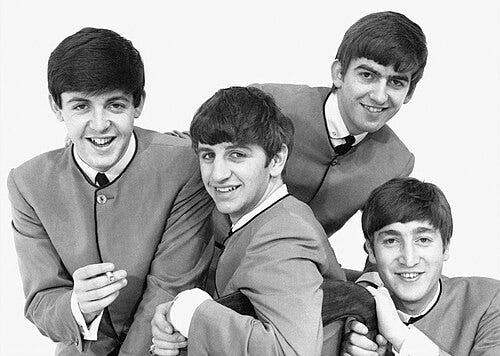
Click here to watch the arrival in New York
Click here to watch
62 years ago this week, on February 7, 1964, The Beatles set foot in the United States for their first American tour. The effect was seismic. The four lads from Liverpool, although they didn’t yet know it, would change the entire direction of popular music on both sides of the Atlantic and beyond.
It is difficult to overstate their influence but, at the time of their joyful arrival in New York, all we knew was that their songs were catchy and easy to dance to. The rest is history.
Here’s the first song they sang to Americans live on TV on the Ed Sullivan Show. If you too belong to the generation where the most important choice we had to make was whether we preferred the Beatles to the Rolling Stones, you will enjoy this.
Gustav Klimt – The Main Man Of Austria’s Art Nouveau
Click here to watch
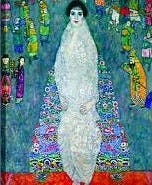
Here she is again, properly captioned this time. This past November, the Portrait of Elisabeth Lederer by Austrian artist Gustav Klimt sold at Sotheby’s in New York for $236.4m(£179m), becoming the second most expensive work of art ever sold at auction. The 1914–1916 masterpiece, which survived the Holocaust, set a new record for 20th-century art, highlighting the continued, immense value of his work.
At the turn of the 20th century, Vienna was a center of political power as well as avant-garde culture, home to some of the world’s greatest composers, architects, writers, and artists. One who helped define this age of glamour, elegance, and decadence was the artist Gustav Klimt.
Klimpt would have never have believed that a painting of his could become one of the most valuable art works in the world. As a child, his family had no fewer than five different addresses, each time forced to move in search of cheaper accommodation.
He survived his poverty-stricken childhood to become a leading member of the Viennese Secession Movement. His work helped to define Art Nouveau and he was a fashionable portraitist of the Viennese Golden Age.
Klimt’s primary subject was the female body, and his works are marked by a frank eroticism. Klimt had many relationships with women and fathered at least fourteen children although he never actually married his lifelong companion, Emilie Floge.
He is best known for The Kiss and Portrait of Adele Bloch-Bauer I but the portrait that disappeared into Nazi hands during WW2, Portrait of Elisabeth Lederer, was thought to be lost forever until it turned up in the collection of American collector Leonard Lauder after his death and was sold by Sotheby’s along with many other works from his collection.
This portrait is one of only a few of Klimt‘s works to survive World War II intact. It depicts Elisabeth Lederer, an heiress and the daughter of one of Klimt’s patrons, wearing a white robe and standing in front of a blue tapestry covered in Asian motifs.
Born Jewish, daughter of the industrialist August Lederer, Elizabeth married Baron Wolfgang von Bachofen-Echt in 1921, converting to Protestantism, but reverted and became Jewish again after their divorce in 1938. The assumption is that, with war threatening, the Baron didn’t want to be married to a Jew, even a Protestant one. Following the Anschluss of 1938, much of her family fled and the Lederer art collection was looted by the Nazis.
Gustav Klimt died 108 years ago this week on February 6, 1918.
Gene Kelly and Donald O’Connor – Moses Supposes

Click here to watch
Gene Kelly died 30 years ago this week, Donald O’Connor died in September 2003, but they were a wonderful partnership. To prove the point, here, from Singin’ in the Rain, is one of the finest examples of duo tap dancing in movie history.
Note how they know, throughout the number, where the other is, note how they constantly check their positioning without appearing to look at one another. With all Gene Kelly’s storied duets with a host of partners, including Fred Astaire, this is the one I always go back to as the best example of his comedic dance talent.
O’Connor was vastly talented and seriously under-rated. He was as flexible and at least as proficient a dancer and comedien as Kelly but not as handsome, hence, not as famous.
Defiant Requiem: Verdi at Terezín
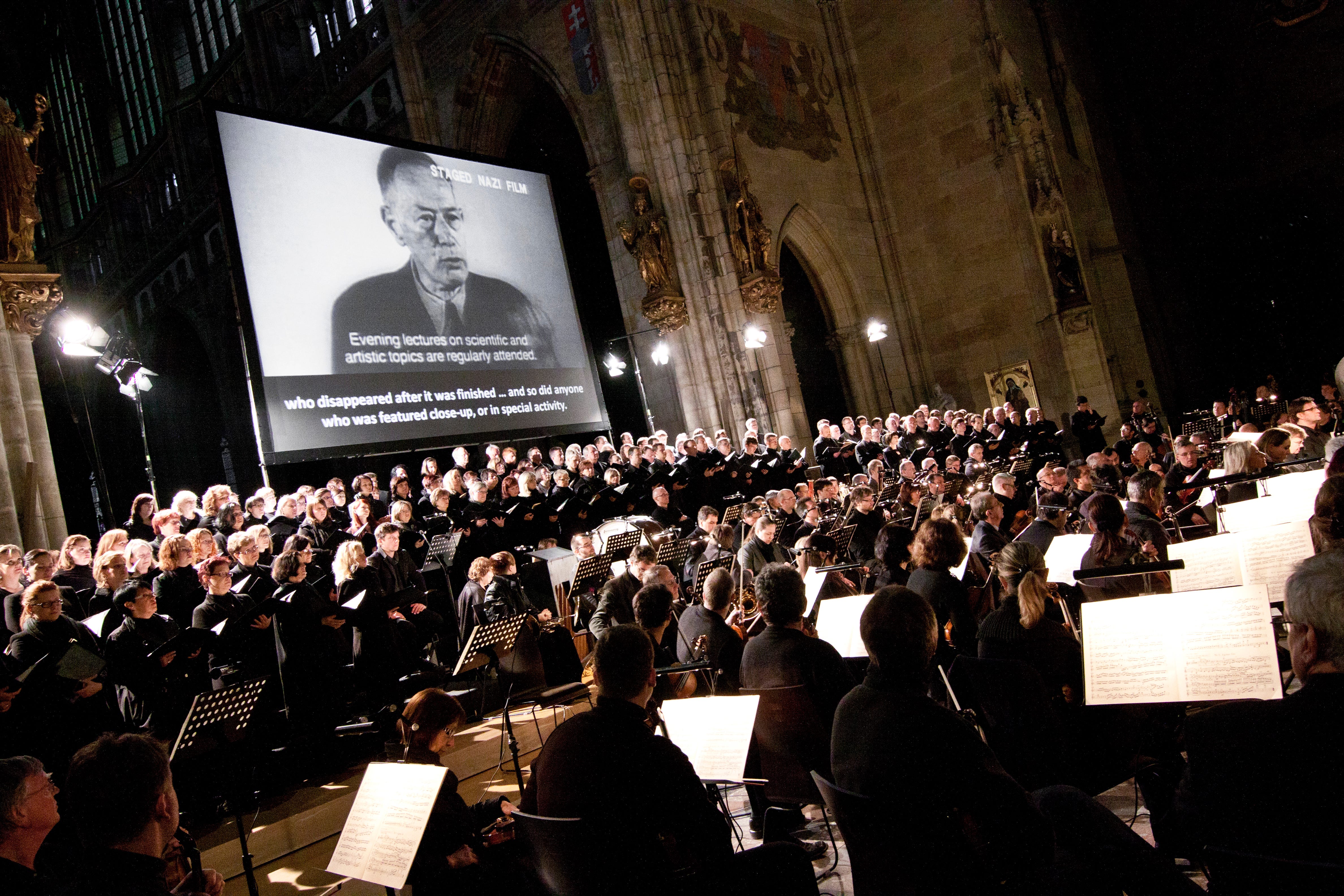
Click here to watch
This is a performance/documentary about the courageous Jewish prisoners in the Theresienstadt Concentration Camp (Terezín) during World War II who performed Verdi’s Requiem while experiencing the depths of human degradation.
Conceived and directed by Maestro Murry Sidlin, Defiant Requiem is not just a performance of the Verdi Requiem, but a tribute to the inspired leadership of imprisoned conductor Rafael Schächter who was forced to reconstitute the choir three times as members were transported to Auschwitz and to their deaths.
What those performers achieved is unimaginable today and Maestro Sidlin and these contemporary performers honour them with this performance.
At the height of the War, the conductor Rafael Schächter told the choir, “We will sing to the Nazis what we cannot say to them.” And they did, until they couldn’t sing anymore.
Thank you for being a Theatrewise reader. You can’t know how much I value each of you. Charlie Chaplin is on the way for Paid Subscribers. Look in your Inbox on Wednesday, as promised, the first Wednesday of the month.
Another fabulous post.
I was so moved to see Klimt's portrait of Adele Bloch Bauer 'The Woman in Gold' at the Neue Museum in NYC.
How miserable to hear that Goldoni should die a pauper - so incredibly unfair. I think about Gaudi and his death.