

THE ARTS ONLINE
RUTH LEON'S THEATREWISE


Good Morning and Welcome to Ruth Leon’s Theatrewise
There’s only one more week before I decamp London for my other hometown, New York. I’m excited. The new theatre season is just starting on Broadway, ballet, opera and cabaret are in full swing, and there is much to see and complain about. I’ll report back to you when I’m in the thick of it.
Once the Tony Award deadline has passed, and I’ve seen everything possible on Broadway, I’m off to California for the wedding of a much-loved god-daughter and to stay with music friends in San Francisco. Then, before returning to London, I plan to travel south for an important festival of new music in Ojai that I’ve wanted to get to for years but somehow the dates never worked out before. Again, more on this when I get there.
But the question I need to tackle before I leave is the question I’m asked every day now, increasingly urgently now that my departure is imminent: Why am I choosing to go to the United States at this moment? This query is coming from both sides of the Atlantic. Canadian friends are refusing to travel to the US or buy American goods. British friends, offended by being insulted and bullied into participating in a war they don’t support, are nonplussed by my enduring love for my adopted country, and American friends are trying to leave as quickly as possible.
The only answer I can offer is that, for more than 50 years, New York has been my home, every bit as much as London. The United States and its people, its core values and its innate decency will, I believe, triumph in the end. The rest is just politics and will pass. I hope.
In the meantime, the theatre, the music, the opera and the ballet in New York are calling me to get on that flight, but most of all, my friends, those irreplaceable human beings who have been with me for a lifetime, are there, and I can’t imagine my life without them.
This doesn’t mean that you will be left without online treats in Ruth Leon’s Theatrewise or Backgrounders. One of the joys of a writer’s life is that I can write anywhere. This week, there’s an unmissable concert of Spirituals from the late great Jessye Norman and the still very much alive Kathleen Battle at Carnegie Hall.
Here too is the singing of Nat King Cole, the first Black American to have his own radio and television show in the segregated United States. The smoothness of that voice and the modesty of his presentation is definitely worth sharing even if it were not also his birthday. Which it is.
And I noticed that this week Rudolf Nureyev would have celebrated his 88th birthday had he not died, far too young, of AIDs. So here is a mini-celebration of a life lived for ballet and a wonderfully simple rendition of the pas de deux from Swan Lake with his partner, Margot Fonteyn.
Many thanks to the Paid Subscribers who have helped me decide on the subject of April’s Backgrounder. It will be Josephine Baker, the tiny entertainer who used her fame during WW2 to become a decorated hero of the French Resistance.
Access to all the online performances today couldn’t be easier, just clink on the links beneath the pictures. Most are free but there’s a little charge to rent the Spirituals. It’s worth it, I promise. One suggestion. If you don’t already have one, it’s a good idea to use an Ad-free link so that you can watch the YouTube videos without inopportune interruptions.
Spirituals in Concert – Carnegie Hall
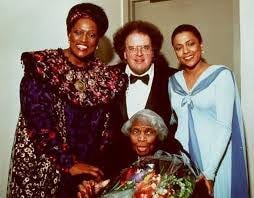
Click here to rent for $3.99 or for a 7-day free trial
On March 18, 1993, 32 years ago this week. Jessye Norman and Kathleen Battle gave a legendary concert of spirituals at Carnegie Hall.
Throughout their starry careers and beloved by opera fans the world over, Jessye Norman and Kathleen Battle thrilled Met audiences for 315 performances. Both sopranos, they represented different branches of the singer’s art, Jessye Norman, with her commanding portrayals across the dramatic repertoire, and Kathleen Battle’s radiant tone and crystalline high notes that were evident in operas stretching from Handel to Strauss.
As two of their generation’s most prominent Black artists, they each dedicated much of their careers to championing the music of their ancestors, including in this thrilling concert of Spirituals recorded live from the historic Carnegie Hall stage, featuring members of the Metropolitan Opera Orchestra and Chorus, and the New York Philharmonic. The ground-breaking Black contralto Marian Anderson was in the audience.
The programme, conducted by James Levine, includes such timeless favorites as “Swing Low, Sweet Chariot,” “He’s Got the Whole World in His Hands,” “Balm in Gilead,” and many more.
Nat King Cole
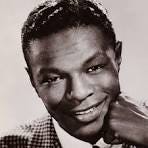
Click here to watch
Nathanial Adams Cole was born on March 17, 1919, 107 years ago this week in Montgomery, Alabama. His family moved to Chicago and his mother, who was his only teacher, taught him to play the piano and organ when he was four. By the time he was a teenager he was already a well-known jazz pianist with his own Trio, first in Chicago, and soon throughout the United States.
At first, he sang only occasionally, to add variety to his King Cole Trio’s appearances. Increasingly, though, recognition of his smooth baritone and musical phasing made him a singing star too and soon overtook his piano-playing. “I started out to become a jazz pianist; in the meantime I started singing and I sang the way I felt and that’s just the way it came out.” Bookings and recording contracts followed. His recordings were so popular that his record label, Capitol, used to boast that they were “the label that Cole built”.
His fame spread and he became the first Black artist with his own radio series and, more impressively, his own television series. “The Nat King Cole Show” was the first nationally broadcast television show hosted by a Black American. Unfortunately, although local sponsors were enthusiastic, NBC, which had supported the series for the first year in the belief that national advertisers would be willing to come on board, had miscalculated. Despite his popularity, there were no corporations willing to take the risk of alienating their customers in the Deep South by supporting a Black artist and it was discontinued. Commenting on the lack of sponsorship, Cole said shortly after the show’s demise, “Madison Avenue is afraid of the dark."
His recordings sold in the millions and, although he died at the age of only 45, there are some songs which remain unmistakeably his. Here is an episode of the Nat King Cole Show from 1957, complete with its cringe-making commercials.
These few songs demonstrate his ability to take any song and make it his own, but his version of “Pretend” here is indelible.
Rudolf Nureyev - Superstar
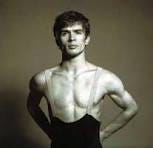
Click here to watch
When Rudolf Nureyev died of AIDs, aged only 54, in January, 1993, he left a unique legacy, that of being the first male ballet dancer to have become a household name.
Today's male dancers have no concept of the impact Rudolf Nureyev had back in the early 1960's when he defected from the Kirov Ballet. His defection was a sensational news story, but what stood him apart from all other male ballet dancers of the time was his smoldering sensuality, rock solid masculinity, and the unpredictability implicit in every movement. He would try anything. Others had cleaner technique, others were more versatile, but nobody else had that daring and recklessness that Nureyev brought to every performance. Nureyev was dangerous and audiences adored him.
Not just ‘scaffolding’ to lift the ballerina, this male dancer was just as presentational as any partner and a whole lot stronger than most. It was up to his partner to compete with him for the audience’s attention as he made clear with every gesture that he was not there just to hold her up. That is why the extraordinary partnership with Margot Fonteyn worked, because her line, delicacy and strength matched and emphasised his.
Rudolf Khametovich Nureyev was born in the USSR on this day in 1938. Ballet was his way out of the peasant life in rural Russia. Once he had defected, he was declared an enemy of the state and he saw his mother again only once, when she was dying.
Graduating out of the Vaganova Academy into the Kirov Ballet at the age of 19, he was immediately recognised as supremely talented and quickly promoted to principal dancer, even partnering the company’s senior ballerina from the outset.
Always a rebel, he was invariably forgiven his escapades because he was a star. But when he was allowed to travel to Paris and was seen to be frequenting gay bars and socialising with young French dancers, the KGB agents travelling with the Kirov party tried to send him back to Russia. He refused, instead imploring French friends to help him defect. The rest is history.
He met Fonteyn, then apparently at the end of her career, in 1961 and they first danced together in February 1962. She was 19 years his senior but as one critic wrote about that first peformance, “Fonteyn has shed half her years to match him with contrasting grace and sparkle.” Each of them, from opposite ends of the ballet spectum, had found the partner to complete them.
Nureyev was difficult, mercurial, sulky, uneducated, boastful and not much fun to be with, but he adored Margot and she him. When she contracted cancer, Rudi paid for her medical expenses until the end of her life.
Here is the White Swan pas de deux from Swan Lake, Rudi and Margot, dancing in a television studio, stronger by far for being unencumbered by the usual folderol of scenery and opera house lighting, just the two of them, together and apart, in unison and in competition, showing what each has to offer and giving Nureyev every opportunity to show what he had alone and what they had together. So much.
There will be lots more arts online next week on Ruth Leon’s Theatrewise so please come back. I’m hard at work on the Backgrounder about Josephine Baker which is due on April 1. Please join us if you can.