

BACKGROUNDER - FRED ASTAIRE
RUTH LEON'S THEATREWISE

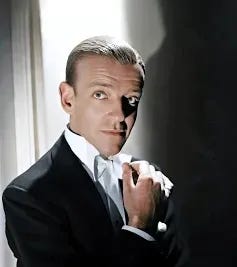
Fred Astaire was 34 and at a loose end. Someone suggested he should go to California and take a screen test. The movie executive who evaluated it wrote on his card: “Fred Astaire – “Balding. Can’t sing, can’t act, can dance a little.”
And thus began a 70-year career as a movie star, the most significant dancer in the history of the film industry. When sound came in, Al Jolson’s The Jazz Singer (1927) was not nearly as effective in capturing the audience as the human body in motion, the tapping feet and beckoning hands of the dance. Dance provided the perfect synchronization of sight and sound, exhilarating to an audience which had seen only silent movies, and its success was very largely Astaire’s doing.
But we’re getting ahead of ourselves. First came the dancer. Or, more accurately, dancers.
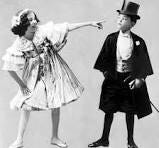
Fred and his sister Adele had been stage stars since they were very young, although the vicissitudes of child stars meant that they had to take a break of several years when Adele grew too tall for them to look good dancing together. Once they got going, however, they had a stream of Broadway and West End stage hits written by the likes of George Gershwin and presented by the top producers.
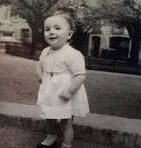
Frederick Austerlitz was born on May 10, 1899 in Omaha, Nebraska to Fritz and Johanna Austerlitz. Johanna, recognising that Adele, three years older, was a naturally talented dancer and singer, dreamed of escaping Omaha by means of her children’s talents. Brother-and-sister acts were popular in vaudeville and Johanna had a boy and a girl so the reluctant Fred had no choice but to follow Adele to the Chambers Dance Academy in Omaha where he also studied piano, accordion and clarinet.
Fritz and Johanna, now known as Ann, separated when Adele and Fred were eight and five, after a local dance teacher urged them to put the children on the stage in New York.
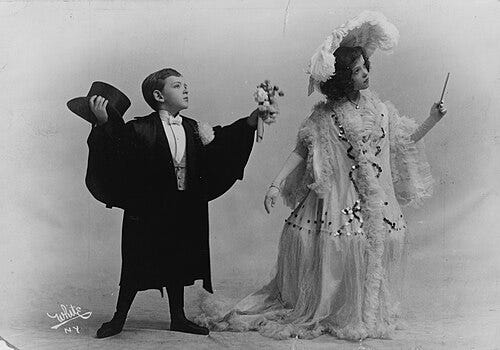
In November 1905, when Fred was 6, they made their debut in Keyport, New Jersey. The act was called Juvenile Artists Presenting an Electric Musical Toe-Dancing Novelty. Astaire wore a top hat and tails in the first half and a lobster outfit in the second. A local paper wrote, “the Astaires are the greatest child act in vaudeville,” and they were on their way.
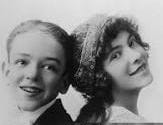
For many years thereafter it was understood that Adele was the talented one, Fred just there to support her. Unlike Adele, though, he took it seriously. Dance critic Arlene Croce wrote, “In vaudeville, the grinding schedule of rehearsal and performance made a workaholic of Fred and a slacker of Adele. With her huge natural talent, sparkling presence, and spontaneous wit, she could go on stage with no preparation and improvise, to his intense dismay.”
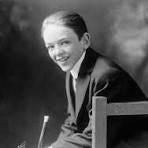
Fred developed other talents. He was always on the lookout for new music and dance ideas and he took care of the planning, the choreography and the logistics of the shows, always showcasing Adele.
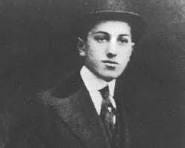
By age 14, he had assumed the musical responsibilities for their act. He first met George Gershwin, aged 16, who was working as a song plugger for Jerome H. Remick’s music publishing company, in 1916 and they became instant friends, George promising to write a musical just for them. This friendship had a profound effect on both careers.